toshiba 14000 btu portable air conditioner manual
The Toshiba 14000 BTU portable AC offers convenient cooling, easily moved with its four wheels and included kit. It’s designed for spaces up to 550 sq. ft.
Overview of the RAC-PT1412HVWRU Model
The Toshiba RAC-PT1412HVWRU is a smart inverter portable air conditioner, boasting 14,000 BTU (ASHRAE) / 12,000 BTU (SACC) cooling power. This model prioritizes ease of use with its included hose and window kit, facilitating simple relocation between rooms. User manuals and Reddit discussions highlight its features, including condensate management and inverter technology. It’s designed for effective cooling in areas up to 550 square feet, offering a versatile climate control solution.
Key Features and Specifications
This Toshiba unit features Smart Inverter technology for efficient cooling and energy savings. It offers both cooling and fan modes, with a coverage area reaching 550 sq. ft. Key specs include 14,000 BTU (ASHRAE) / 12,000 BTU (SACC) cooling capacity. The four-wheel design ensures portability, while the included kit simplifies installation. Reddit users discuss its dual-hose design and relatively quiet operation, making it a compelling portable AC option.
Safety Precautions
Always adhere to the user manual’s guidelines, especially regarding electrical safety and intended use. This appliance isn’t for those with reduced physical capabilities.
General Safety Guidelines
Prioritize safety when using the Toshiba portable AC. The manual stresses this appliance isn’t intended for individuals with diminished physical, sensory, or mental capabilities, or lack of experience. Children should be supervised. Avoid using unapproved installation materials. Ensure proper ventilation and never insert objects into the unit. Disconnect power before cleaning or maintenance. Follow all warnings and instructions detailed within the provided user manual for safe operation and longevity of your air conditioner.
Electrical Safety Instructions
Ensure electrical safety with your Toshiba AC. The manual explicitly states to strictly adhere to the wiring label attached to the machine for all connections. Proper grounding procedures are crucial to prevent shock hazards. Never operate with a damaged cord or plug. Avoid using extension cords. Disconnect the unit from the power source before any maintenance or cleaning. If electrical issues arise, consult a qualified technician – do not attempt self-repair, as this could void the warranty and create danger.
Intended Use and Restrictions
This Toshiba portable AC is designed for standard room cooling. The user manual clearly states it’s not intended for use by individuals with reduced physical, sensory, or mental capabilities, or by children without supervision. Do not use it in areas with explosive atmospheres or near flammable materials. Installation should only utilize recommended components; avoid unapproved devices. It’s for household use only, not commercial or industrial applications.
Installation Instructions
Proper installation involves unpacking all components, carefully installing the window kit, and securely connecting the exhaust hose for optimal performance and cooling efficiency.
Unpacking and Component Check
Carefully unpack your Toshiba RAC-PT1412HVWRU, ensuring all components are present. Verify you have the air conditioner unit itself, the window kit, the exhaust hose, the remote control, and the user manual. Inspect for any shipping damage. The four-wheel design facilitates easy movement, but confirm wheel attachment. Retain the packaging for potential returns or warranty claims. A complete component check prevents issues during installation and operation, guaranteeing optimal cooling performance from the start.
Window Kit Installation
Proper window kit installation is crucial for efficient operation. Adjust the window kit panels to fit your window opening securely. Ensure a tight seal to prevent hot air from re-entering the room. The included kit is designed for easy installation, but follow the manual’s diagrams closely. Seal any gaps with foam or tape for optimal performance. A correctly installed kit maximizes cooling and prevents energy waste, contributing to a comfortable environment.
Hose Connection and Placement
Securely connect the exhaust hose to the back of the air conditioner and the window kit. Ensure a snug fit at both ends to prevent air leakage, maximizing cooling efficiency. Position the hose without sharp bends or kinks, as this restricts airflow. Avoid blocking the hose, maintaining clear space for proper ventilation. Proper hose placement is vital for optimal performance and prevents the unit from overheating.
Operating Instructions
Follow the user manual for safe and effective operation, including initial setup, cooling and fan modes, and understanding the control panel’s functions.
Powering On and Initial Setup
Before first use, carefully review the safety precautions within the user manual. Ensure the unit is placed on a level surface and the exhaust hose is correctly connected. Plug the air conditioner into a grounded outlet, adhering to electrical safety instructions. Power on the unit and allow a brief stabilization period before selecting your desired cooling mode. Familiarize yourself with the control panel and remote control functions for optimal operation and personalized comfort settings.
Cooling Mode Operation
To activate cooling mode, press the designated button on the control panel or remote. Adjust the temperature using the up/down arrows to your preferred setting. The fan speed can also be adjusted for customized airflow. The Smart Inverter technology efficiently delivers cooling, adapting to room conditions. Monitor the condensate level and ensure proper drainage to prevent issues. Enjoy consistent cooling up to 550 sq. ft. with this powerful portable unit.
Fan Mode Operation
Engage fan mode by pressing the corresponding button on the control panel or remote control. This mode circulates air without actively cooling, providing ventilation. Select from multiple fan speeds – low, medium, or high – to suit your comfort level. Fan mode is energy-efficient and ideal for days when cooling isn’t required, simply air circulation. It helps maintain air movement throughout the room, enhancing overall comfort.

Understanding the Control Panel
The control panel features display indicators and buttons for easy operation. It allows users to adjust settings, select modes, and monitor the unit’s status effectively.
Display Indicators and Symbols
The Toshiba portable AC’s display utilizes several indicators and symbols to communicate its operational status. Users should familiarize themselves with these to understand the unit’s functions. Common symbols include cooling mode, fan speed settings, timer indicators, and error codes. A specific symbol denotes when the unit requires condensate drainage, preventing potential issues. The display also shows the selected temperature and operational mode, providing clear feedback to the user. Understanding these indicators ensures optimal performance and troubleshooting capabilities.
Button Functions Explained
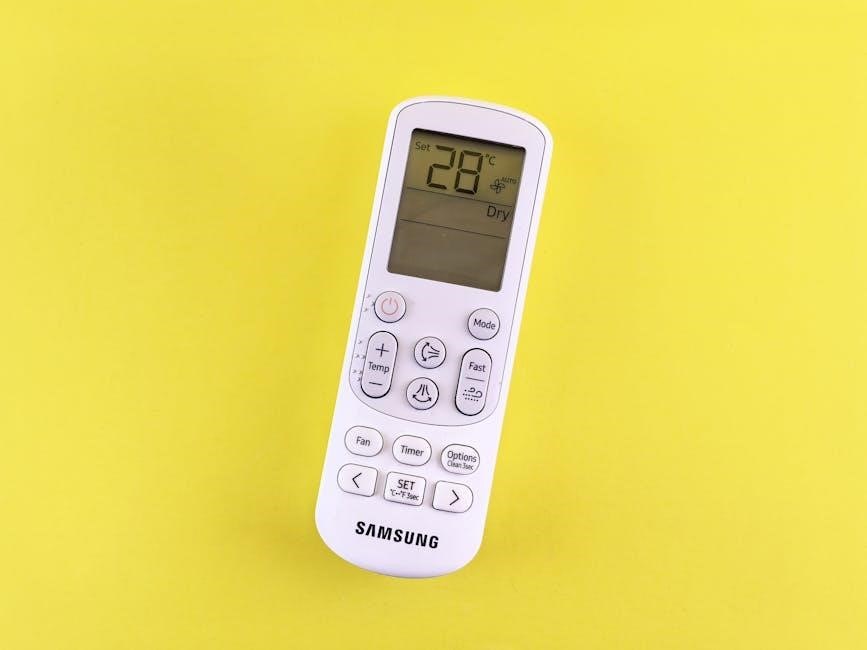
The control panel features intuitive buttons for easy operation. The power button initiates the unit, while mode selection allows switching between cooling, fan, and potentially other settings. Temperature adjustment buttons increase or decrease the desired room temperature. Fan speed controls offer varying airflow levels. A timer button sets automated on/off schedules. The remote control duplicates these functions for convenient, distant operation. Refer to the user manual for detailed explanations of each button’s specific function and associated settings.
Remote Control Usage
The Toshiba remote control mirrors the unit’s control panel functions, offering convenient operation from across the room. Ensure the remote has fresh batteries for optimal performance. Point the remote directly at the air conditioner’s front panel. Utilize buttons for power, mode selection (cool, fan), temperature adjustment, and fan speed control. The timer function allows for preset on/off scheduling. Refer to the user manual for a detailed diagram and explanation of each remote control button’s specific purpose.
Maintenance and Troubleshooting
Regular filter cleaning and condensate management are crucial for optimal performance. Addressing common issues like drainage problems ensures efficient and reliable cooling operation.
Filter Cleaning Procedures
Maintaining a clean air filter is essential for efficient operation and air quality. Regularly inspect the filter, typically located on the rear of the unit, for dust and debris accumulation. Remove the filter carefully and vacuum it gently, or wash it with mild soap and water. Ensure the filter is completely dry before reinstalling it to prevent damage or mold growth. A clogged filter reduces airflow and cooling performance, potentially leading to increased energy consumption and system strain. Cleaning frequency depends on usage, but monthly checks are recommended.
Water Drainage – Condensate Management
This Toshiba AC generates condensate during cooling, requiring periodic drainage. Some models feature a self-evaporating function, minimizing water collection, but manual drainage may still be necessary. Locate the drainage port, usually at the rear, and carefully remove the drain plug. Drain the water into a suitable container, avoiding spills. Reddit discussions highlight some users experiencing faster water filling, necessitating more frequent emptying. Proper drainage prevents water damage and ensures optimal performance.
Common Issues and Solutions
Users report occasional issues with the Toshiba 14000 BTU unit. Condensate drainage filling quickly is a noted concern on r/hvacadvice, requiring frequent emptying. Ensure proper hose connection and window kit sealing for optimal cooling. If the unit isn’t cooling effectively, check the air filter for blockage. For electrical issues, consult a qualified technician; never attempt self-repair. Refer to the user manual for detailed troubleshooting steps and warranty information.
Advanced Features
This Toshiba model boasts Smart Inverter technology and offers both single and dual hose options, providing efficient cooling for rooms up to 550 square feet;
Smart Inverter Technology Explained
The Toshiba RAC-PT1412HVWRU utilizes Smart Inverter technology, a key feature differentiating it from standard portable AC units. Reddit discussions highlight that this inverter style, specifically the Midea/Toshiba Duo, often requires less frequent condensate draining compared to non-inverter models. This technology allows for variable speed operation, adjusting cooling output based on the room’s needs, resulting in improved energy efficiency and quieter performance. It maintains a more consistent temperature, avoiding the on/off cycling of traditional units.
Dual Hose vs. Single Hose Systems
The Toshiba RAC-PT1412HVWRU employs a dual hose system, a significant advantage over single-hose models. Discussions on r/hvacadvice confirm users report no negative pressure issues with this unit, unlike some single-hose alternatives. Dual hoses draw air from outside to cool the condenser, improving efficiency and preventing the creation of a vacuum within the room. This results in faster cooling and reduced strain on the unit, offering superior performance.
Coverage Area – Up to 550 sq. ft.
The Toshiba 14000 BTU portable air conditioner is effectively designed to cool rooms up to 550 square feet. This makes it a versatile solution for bedrooms, living rooms, or offices. However, optimal performance depends on factors like insulation, ceiling height, and direct sunlight. Consider these variables when assessing if the unit adequately meets your specific cooling needs for maximum comfort.
Technical Specifications
This unit boasts 14,000 BTU (ASHRAE) / 12,000 BTU (SACC) cooling power, with detailed power consumption, dimensions, and weight information available in the manual.
BTU Rating (ASHRAE vs. SACC)
Understanding the BTU rating is crucial for selecting the right air conditioner. The Toshiba RAC-PT1412HVWRU model features 14,000 BTU as measured by the ASHRAE standard, representing the total cooling capacity. However, the Seasonal Adjusted Cooling Capacity (SACC) is 12,000 BTU, a more realistic measure of performance under typical operating conditions.
This difference reflects varying testing procedures, ensuring consumers have a clear understanding of the unit’s actual cooling potential.
Power Consumption Details
Efficient operation is a key feature of the Toshiba 14000 BTU portable air conditioner, thanks to its Smart Inverter Technology. While specific power consumption varies with settings and ambient temperature, the unit is designed to minimize energy usage. Detailed energy guide information, including wattage and estimated yearly operating costs, can be found on the Energy Guide label (Model Number RAC-PT1412HVWRU).
This allows for informed decisions regarding energy efficiency.
Dimensions and Weight
The Toshiba 14000 BTU portable air conditioner is designed for mobility, but its size and weight are important considerations for placement and transport. While precise dimensions aren’t explicitly stated in the provided snippets, the unit’s portability suggests a manageable footprint. The included four-wheel design aids in movement.
Weight details are not available, but it’s substantial enough to require the wheels for easy relocation.
Reddit Discussions & User Experiences
Reddit users discuss the Toshiba/Midea Duo’s performance, condensate drainage, and inverter technology, offering insights into real-world usage and potential issues.
RAC-PT1411HWRU User Manual Insights
The user manual emphasizes proper operation and maintenance for optimal performance. It cautions against use by individuals with reduced physical capabilities without supervision. Installation requires adherence to recommended materials and procedures, avoiding unapproved modifications.
Crucially, the manual stresses following wiring labels for all electrical connections, ensuring safety and preventing damage. It provides helpful hints for maximizing the air conditioner’s lifespan and efficiency, covering safety precautions and operating instructions thoroughly.
Condensate Drainage Issues (r/hvacadvice)
Reddit discussions on r/hvacadvice reveal frequent condensate drainage concerns with the Toshiba/Midea inverter models. Users report some units require surprisingly frequent emptying, while others rarely need attention. This variance suggests potential inconsistencies in manufacturing or environmental factors impacting humidity levels.
Notably, one user contrasted the Midea/Toshiba unit with a Pinguino and standard AC, finding only the inverter style needed frequent draining, highlighting a potential design characteristic.
Inverter Style Performance (Midea/Toshiba Duo)
Reddit users discuss the performance of the Toshiba/Midea Duo 14000 BTU inverter portable AC, noting consistent operation even running all day. One user highlighted that, unlike other portable units they own, this inverter model doesn’t create a negative pressure issue within the room.
This suggests the inverter technology effectively manages cooling and airflow, potentially offering improved efficiency and comfort compared to traditional portable AC designs.

Wiring and Electrical Connections
Always adhere to the wiring label on the machine for all electrical connections, ensuring proper and safe installation of your Toshiba portable air conditioner.
Following Wiring Labels
Strictly adhere to the wiring label affixed to the Toshiba air conditioner unit during all electrical connection procedures. This label provides crucial information regarding voltage, amperage, and grounding requirements, ensuring safe and correct installation. Ignoring these instructions could lead to electrical hazards, damage to the unit, or voiding the warranty. Double-check all connections against the label before powering on the device, prioritizing safety and operational integrity. Proper wiring is paramount for reliable performance.
Proper Grounding Procedures
Ensure a properly grounded electrical outlet is used when operating the Toshiba portable air conditioner. Grounding provides a safe path for electrical current in case of a malfunction, preventing shock hazards. Never remove or alter the grounding prong on the power cord. If an extension cord is necessary, it must be a heavy-duty, three-wire cord with grounding capabilities. Incorrect grounding can compromise safety and damage the unit; always prioritize electrical safety.
Energy Guide Information
The model RAC-PT1412HVWRU features 14,000 BTU ASHRAE / 12,000 BTU SACC ratings, providing details on energy efficiency and consumption for informed use.
Model Number RAC-PT1412HVWRU Details
The RAC-PT1412HVWRU is a Smart Inverter Portable Air Conditioner, offering both cooling and potential heating capabilities (depending on the specific configuration). This model boasts 14,000 BTU (ASHRAE) and 12,000 BTU (SACC) cooling power, suitable for rooms up to 550 square feet.
It includes a convenient 4-wheel design for portability, along with a complete hose and window kit for easy installation. Energy Guide information is readily available for this specific model number, detailing its energy efficiency ratings.
Energy Efficiency Ratings
The Toshiba RAC-PT1412HVWRU’s energy performance is detailed in its Energy Guide, providing crucial information for consumers. It features Smart Inverter technology, designed to optimize power consumption and reduce energy waste. The unit’s efficiency is presented using both ASHRAE and SACC ratings – 14,000 BTU and 12,000 BTU respectively.
These ratings allow for a standardized comparison with other portable air conditioning models, helping users make informed decisions based on energy costs.
Warranty Information
The Toshiba portable AC warranty covers defects in materials and workmanship. Specific coverage details and claim procedures are outlined in the product documentation.
Coverage Details
The Toshiba RAC-PT1412HVWRU warranty provides coverage for manufacturing defects affecting the unit’s function. This includes parts and labor for repairs during the warranty period, typically one year from the purchase date. Damage resulting from misuse, improper installation, or lack of maintenance isn’t covered. Retain your proof of purchase for warranty claims; detailed claim procedures are available in the manual. The warranty is non-transferable and applies to residential use only.
Claim Procedures
To initiate a warranty claim for your Toshiba RAC-PT1412HVWRU, first gather your purchase proof and a detailed description of the issue. Contact Toshiba’s customer support via their website or phone number (found in the manual). They will likely request photos or videos demonstrating the defect. If approved, they’ll authorize a repair or replacement, potentially requiring you to ship the unit to a designated service center.
Frequently Asked Questions (FAQ)
Common user queries regarding operation, condensate drainage, and troubleshooting are addressed in the manual, alongside Reddit discussions offering practical insights and solutions.
Addressing Common User Queries
Users frequently inquire about condensate drainage, particularly noting faster filling in the Midea/Toshiba inverter models. The manual details proper procedures, but Reddit’s r/hvacadvice offers supplemental advice. Questions also arise regarding installation, specifically window kit compatibility and hose connection. Electrical safety and wiring, following labeled instructions, are common concerns. Finally, understanding the difference between ASHRAE and SACC BTU ratings is often requested, clarified within the Energy Guide information.