singer 2263 manual
Singer 2263 Manual: A Comprehensive Guide
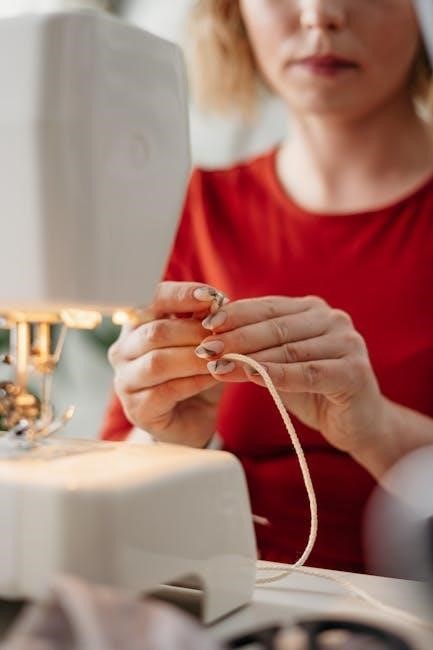
This guide provides detailed instructions for the Singer Simple 2263 sewing machine, covering setup, operation, troubleshooting, and maintenance for optimal performance.
Historical Background of Singer Sewing Machines
The Singer story began in 1851 with Isaac Singer’s pivotal patent for the first truly practical sewing machine. This innovation wasn’t just a mechanical advancement; it fundamentally altered the textile industry and domestic life. Prior to Singer’s design, sewing was a laborious, time-consuming handcraft.
Singer’s machine, and the subsequent improvements and refinements, dramatically increased the speed and efficiency of clothing production. The company quickly rose to prominence, becoming synonymous with sewing itself.
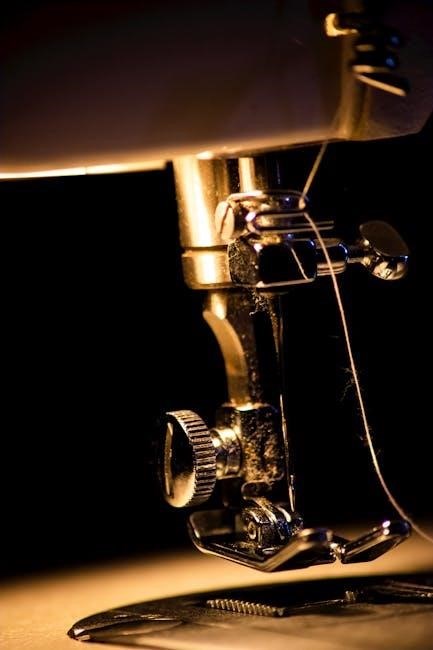
Throughout the late 19th and 20th centuries, Singer continued to pioneer sewing technology, adapting to changing needs and introducing new features. This legacy of innovation continues today, influencing even models like the Singer Simple 2263, built upon over 170 years of sewing expertise.
The Significance of the 1851 Patent
Isaac Singer’s 1851 patent was a watershed moment, not merely for the Singer company, but for the entire manufacturing landscape. His design incorporated an over-and-under feed mechanism, a crucial element enabling consistent stitch formation – a significant improvement over existing, less reliable attempts.
This patent wasn’t just about a single invention; it sparked a wave of further innovation. It laid the groundwork for mass production of clothing, shifting textile work from homes and small shops to factories.
The patent’s impact extended beyond industry, democratizing access to manufactured clothing and profoundly impacting social structures. The principles established in 1851 continue to inform sewing machine design, including the user-friendly approach of the Singer Simple 2263.
Singer’s Evolution and Continued Innovation

Since its inception in 1851, Singer hasn’t rested on its laurels. The company consistently adapted to evolving textile needs, introducing advancements like electric motors and various attachment innovations. This commitment to progress shaped Singer into a household name synonymous with quality and reliability.
Throughout the 20th and 21st centuries, Singer continued refining its designs, balancing sophisticated features with user accessibility. This philosophy is clearly reflected in models like the Singer Simple 2263, designed for beginners yet capable of handling diverse projects.
Singer’s legacy isn’t just about technological leaps; it’s about empowering creativity and making sewing accessible to all, a tradition upheld in every machine they produce.
Introducing the Singer Simple 2263
The Singer Simple 2263 is a popular choice for those new to sewing, or seeking a reliable, no-frills machine for everyday projects. It embodies Singer’s long-standing commitment to user-friendly design and dependable performance. This model streamlines the sewing experience, offering essential stitches and straightforward operation.
Designed with beginners in mind, the 2263 eliminates complexity, focusing on core functionality. It’s lightweight and portable, making it ideal for small spaces or taking to classes. Despite its simplicity, it’s a robust machine capable of handling a variety of fabrics and tasks.
The Singer Simple 2263 is a gateway to the world of sewing, offering confidence and creative possibilities.
Key Features of the Singer 2263
The Singer Simple 2263 boasts a selection of six built-in stitches, including essential options for everyday sewing like straight, zigzag, and buttonhole stitches. Its adjustable stitch length and width provide versatility for different fabrics and project requirements. A free arm facilitates cuff and sleeve sewing with ease.
This machine features a simple threading system, making setup quick and straightforward, even for beginners. The drop-in bobbin is transparent, allowing for easy monitoring of thread supply. A two-point feed dog system ensures consistent fabric feeding, resulting in even stitches.
Its durable metal frame provides stability during operation, contributing to long-lasting reliability.
Understanding the Machine Components
The Singer 2263 comprises several key components working in harmony. The power switch initiates operation, while the speed control regulates sewing pace. The handwheel allows for manual stitch placement and control. The stitch selection dial enables choosing from the six built-in stitch patterns.

The tension dial adjusts thread tension for optimal stitch formation. The presser foot lever raises and lowers the presser foot, securing fabric during sewing; The bobbin winder prepares bobbins for use. The feed dogs advance fabric under the needle, ensuring consistent stitching.
Familiarizing yourself with these parts is crucial for effective machine operation and maintenance.
Identifying the Main Parts
The Singer Simple 2263 features a straightforward design with easily identifiable components. Key parts include the power switch, controlling machine operation, and the speed control, dictating sewing pace. The handwheel facilitates manual stitch control, while the stitch selection dial offers six built-in stitch options.
Locate the tension dial, crucial for adjusting thread tension, and the presser foot lever, which raises and lowers the presser foot. The bobbin winder prepares bobbins, and the feed dogs advance fabric smoothly. Don’t overlook the needle clamp, securing the needle, and the presser foot holder, attaching various presser feet.
Presser Feet and Their Functions
The Singer Simple 2263 typically includes a standard presser foot, ideal for everyday sewing tasks like straight and zigzag stitches on woven fabrics. An additional zipper foot is often provided, enabling precise stitching close to zipper teeth. This foot allows for even and professional-looking zipper applications.
While the 2263 is a basic model, understanding presser foot functionality expands sewing capabilities. Different feet, sold separately, can tackle buttonholes, blind hems, and decorative stitching. Correct presser foot selection ensures optimal fabric handling and stitch quality. Always ensure the correct foot is securely attached before beginning a project.
Setting Up the Singer 2263
Before your first project, proper setup is crucial for smooth operation. Begin by placing the Singer 2263 on a stable, level surface. Next, attach the power cord and ensure the machine is switched off. The bobbin needs winding before threading; follow the diagram in the manual to correctly wind the bobbin with your chosen thread.
Once wound, insert the bobbin into the bobbin case, again referencing the manual for correct orientation. Finally, thread the machine following the numbered threading path indicated on the machine itself. Proper threading is essential to avoid issues during sewing.
Winding the Bobbin
Winding the bobbin correctly is a foundational step. First, place the spool of thread onto the spool pin. Next, guide the thread through the thread guide, and then onto the bobbin. Secure the bobbin onto the bobbin winder spindle. Push the bobbin winder to the right and engage it by pressing down on the bobbin winder stem.
Press the foot pedal gently to start winding. The machine will automatically stop when the bobbin is full. Disengage the bobbin winder, remove the bobbin, and trim the thread. Ensure the bobbin is wound evenly to prevent issues during sewing. Refer to the manual’s diagrams for visual guidance.
Threading the Machine
Proper threading is crucial for consistent stitch quality. Begin by ensuring the presser foot is raised and the needle is in its highest position. Place the spool of thread on the spool pin. Guide the thread through the first thread guide, then down and around the tension disc. Continue threading through the take-up lever and then down to the needle.
Finally, thread the needle from front to back. Draw a length of thread through the needle eye, approximately 3-4 inches. This ensures smooth feeding. Consult the threading diagram in your Singer 2263 manual for a clear visual representation of the threading path. Incorrect threading can lead to skipped stitches or tension problems.
Basic Sewing Operations
The Singer Simple 2263 excels at fundamental sewing tasks. Before starting, select your desired stitch using the stitch selection dial. Adjust the stitch length and width according to your fabric and project needs. Practice on a scrap fabric piece to ensure proper tension and stitch formation. Gently guide the fabric under the presser foot, maintaining a consistent speed.
Avoid pulling or pushing the fabric; let the machine feed it naturally. The 2263 offers both straight and zigzag stitches, suitable for various applications. Remember to backstitch at the beginning and end of each seam to secure the stitches. Familiarize yourself with these basic operations for successful sewing projects.
Straight Stitching
Mastering the straight stitch is foundational for any sewing project. On the Singer 2263, select the straight stitch option using the stitch selection dial. A standard stitch length of 2.5mm is ideal for most woven fabrics, but adjust as needed for thicker or thinner materials. Ensure the fabric is placed evenly under the presser foot before lowering it.
Begin sewing slowly, guiding the fabric gently. Maintain a consistent speed and avoid pulling. Backstitch at the start and end of your seam for reinforcement. Practice creating straight lines on scrap fabric to develop control. The 2263’s consistent straight stitch provides a professional finish for seams, topstitching, and basting.
Zigzag Stitching
The Singer 2263’s zigzag stitch offers versatility for various applications. Select the zigzag stitch using the stitch selection dial, and adjust the stitch width and length according to your project needs. A narrower width is suitable for reinforcing edges, while a wider width creates decorative effects. For stretch fabrics, a slightly longer stitch length prevents puckering.
Zigzag stitching is excellent for finishing raw edges to prevent fraying, creating buttonholes (though a dedicated buttonhole foot may be beneficial), and sewing knit fabrics. Practice on scrap fabric to understand how different width and length combinations affect the stitch appearance. Consistent fabric feeding is key for a neat zigzag line.
Troubleshooting Common Issues
Encountering problems with your Singer 2263 is common, but often easily resolved. Frequent issues include thread breakage and skipped stitches. For thread breakage, re-thread the machine ensuring correct threading path and proper spool placement. Use quality thread appropriate for your fabric. Skipped stitches often indicate a dull or incorrect needle; replace it with a new, suitable needle.
Also, check bobbin winding and insertion – an improperly wound or inserted bobbin can cause issues. Ensure the presser foot is down while sewing, as this engages the feed dogs. If problems persist, consult the full manual for detailed diagrams and solutions. Regular maintenance prevents many issues.
Thread Breakage Problems

Frequent thread breakage with your Singer 2263 often points to a few key culprits. First, meticulously re-thread the entire machine, top thread and bobbin, following the manual’s diagrams precisely. Ensure the thread is properly seated in all tension discs and guides. Incorrect threading is the most common cause.
Secondly, verify you’re using a thread quality suitable for your fabric weight. Heavy fabrics require stronger thread. A dull or damaged needle can also cause breakage; replace it. Finally, check the bobbin winding – uneven winding leads to inconsistent tension. Adjust tension settings slightly if needed, but avoid extreme adjustments.
Skipped Stitches and Solutions
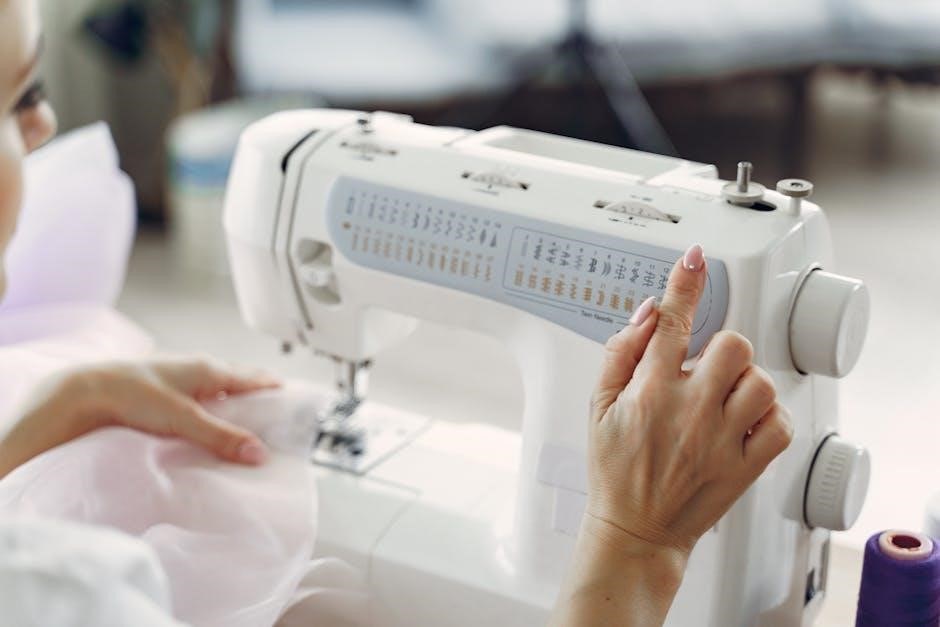
Experiencing skipped stitches on your Singer 2263? Several factors could be at play. Begin by ensuring the needle is correctly inserted – it must be pushed all the way up into the needle clamp. Also, confirm you’re using the appropriate needle type and size for your fabric. A ballpoint needle is crucial for knits, while a universal needle suits woven fabrics.
Next, check the needle’s condition; a bent or damaged needle will cause issues. Re-thread the machine, paying close attention to the thread path. Finally, adjust the presser foot pressure – too much or too little pressure can lead to skipped stitches. Experiment with slight adjustments to find the optimal setting.
Maintenance and Care
Regular maintenance ensures your Singer 2263 operates smoothly for years. Consistent cleaning is paramount; power off and unplug the machine before starting. Use a soft brush to remove lint and dust from the bobbin area, feed dogs, and surrounding components. A small screwdriver can help access tight spaces, but be gentle!

Avoid using liquid cleaners directly on the machine. Instead, apply a small amount to a cloth and wipe surfaces clean. Lubrication is also vital, though the Singer 2263 requires minimal oiling. Consult the manual for specific lubrication points and use sewing machine oil only. Proper care extends the machine’s lifespan and maintains stitch quality.
Cleaning the Singer 2263
Maintaining a clean Singer 2263 is crucial for optimal performance. Always disconnect the power cord before beginning any cleaning procedure. Begin by removing the needle and presser foot. Use the included brush to gently remove lint and thread scraps from the bobbin area, feed dogs, and around the stitch plate. A soft cloth, slightly dampened (not wet!), can wipe down the exterior surfaces.
For hard-to-reach areas, a small screwdriver or tweezers can be helpful, but exercise caution to avoid damaging internal components. Regularly cleaning prevents dust and debris buildup, ensuring smooth operation and preventing skipped stitches or thread breakage. Consistent cleaning extends the life of your machine!
Lubrication Guidelines
Proper lubrication is vital for the Singer 2263’s longevity, but over-oiling can cause more harm than good. The Singer 2263 is largely designed to be maintenance-free regarding oiling; however, occasional lubrication of key areas is recommended. Only use sewing machine oil – never household oils or lubricants. Apply a small drop to the bobbin race and hook area, ensuring even distribution.
Also, a tiny drop on the motor shaft (if accessible) can help maintain smooth running. Avoid oiling the feed dogs or tension discs. Wipe away any excess oil immediately to prevent staining fabric. Refer to the manual for specific lubrication points. Consistent, minimal lubrication ensures quiet operation and prevents wear and tear.
Accessing the Singer Simple 2263 Manual
Finding your Singer Simple 2263 manual is straightforward. Pocono Sew-Vac offers free digital manuals for this model, readily available for download on their website. These digital versions provide the same comprehensive information as the printed copy, accessible anytime, anywhere. eBay also lists new, physical operation guides for purchase, offering a tangible resource for reference;
Singer’s official website may also host manuals or links to authorized distributors. Searching online using keywords like “Singer Simple 2263 manual PDF” will yield numerous results. Having the manual ensures you can fully utilize your machine’s features and troubleshoot any issues effectively.
Digital Manual Availability and Resources
The Singer Simple 2263 boasts excellent digital resource availability. Pocono Sew-Vac prominently features free digital manuals for download, providing immediate access to operating instructions. These downloadable PDFs are incredibly convenient, allowing users to view the manual on computers, tablets, or smartphones.
Beyond Pocono Sew-Vac, a simple internet search reveals numerous websites offering the Singer 2263 manual in digital format. YouTube tutorials also supplement the written guide, visually demonstrating key features and sewing techniques. Utilizing these online resources empowers users to quickly learn and confidently operate their sewing machine, maximizing its potential.
Finding Replacement Parts and Accessories
Sourcing replacement parts and accessories for the Singer Simple 2263 is straightforward. Pocono Sew-Vac offers a dedicated section for Singer Simple 2263 parts, including needles, thread, bobbins, bobbin cases, and a variety of presser feet. This centralized location simplifies the process of finding necessary components to maintain or enhance the machine’s functionality.
Furthermore, numerous online retailers specialize in sewing machine parts, providing a wider selection of accessories. When ordering, referencing the Singer 2263 model number ensures compatibility. Regularly replacing needles and bobbins is crucial for optimal stitch quality and preventing machine issues, extending the lifespan of your Singer sewing machine.
Heavy Duty Sewing Machine Comparison (SINGER 4452)
While the Singer Simple 2263 is ideal for beginners and lighter projects, the SINGER 4452 Heavy Duty machine caters to more demanding tasks. The 4452 boasts a more powerful motor, specifically designed for thicker fabrics like denim, leather, and vinyl, offering greater piercing power. It comes packed with specialty accessories, expanding its capabilities beyond basic sewing.
Compared to the 2263, the 4452 provides a faster sewing speed and increased durability. If your projects frequently involve heavy-duty materials, the 4452 is a worthwhile investment. However, for simple alterations and crafting, the 2263 remains a user-friendly and cost-effective option.